
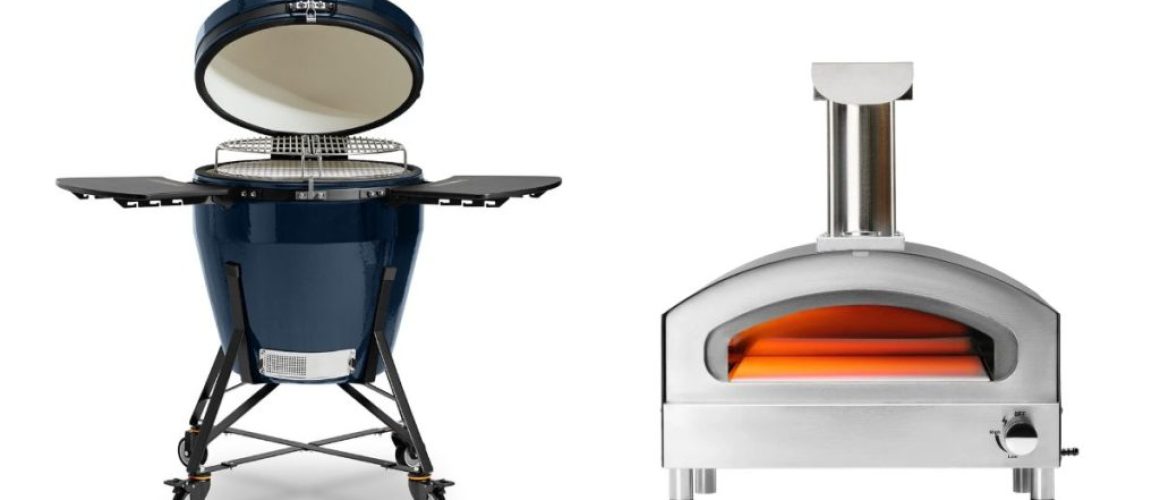
Can You Make Proper Pizza on a Kamado? Kamado vs Dedicated Pizza Oven
Can a kamado make proper pizza? How it compares with a gas pizza oven on heat, speed, cost and versatility, plus the stone, peel and set-up that actually work.
Quick answer
Yes. A kamado with a ceramic stone bakes excellent pizza with a crisp, lightly charred base and a light smokiness that a gas oven cannot give you. It takes about 45 minutes to heat, bakes a pizza in 4–6 minutes and cooks everything else too.
A dedicated gas pizza oven such as the Forneza Forno heats in 10–15 minutes, hits higher temperatures for a true 90-second Neapolitan pizza, and is the better buy if pizza night is a weekly event or you already own a grill. Many of our customers end up with both, and we explain below why that is not as extravagant as it sounds.
“Can I do pizza on it?” is usually the third question after size and price, and it is a fair one: a pizza oven is one of the things a kamado is supposed to replace. The honest answer is that it does, and does it well, with one or two set-up details that make the difference between a soggy base and a proper pizzeria result. We also sell Forneza gas pizza ovens, so this is a comparison from people who cook on both, not a sales pitch for one.
How a kamado bakes pizza
A pizza oven works by hitting the base and the top with intense heat at the same time: a hot floor cooks the base while a domed roof reflects heat back onto the toppings. A kamado is, structurally, the same thing. Thick ceramic walls and a domed lid store heat and radiate it back down, and a ceramic stone on the grate acts as the floor.
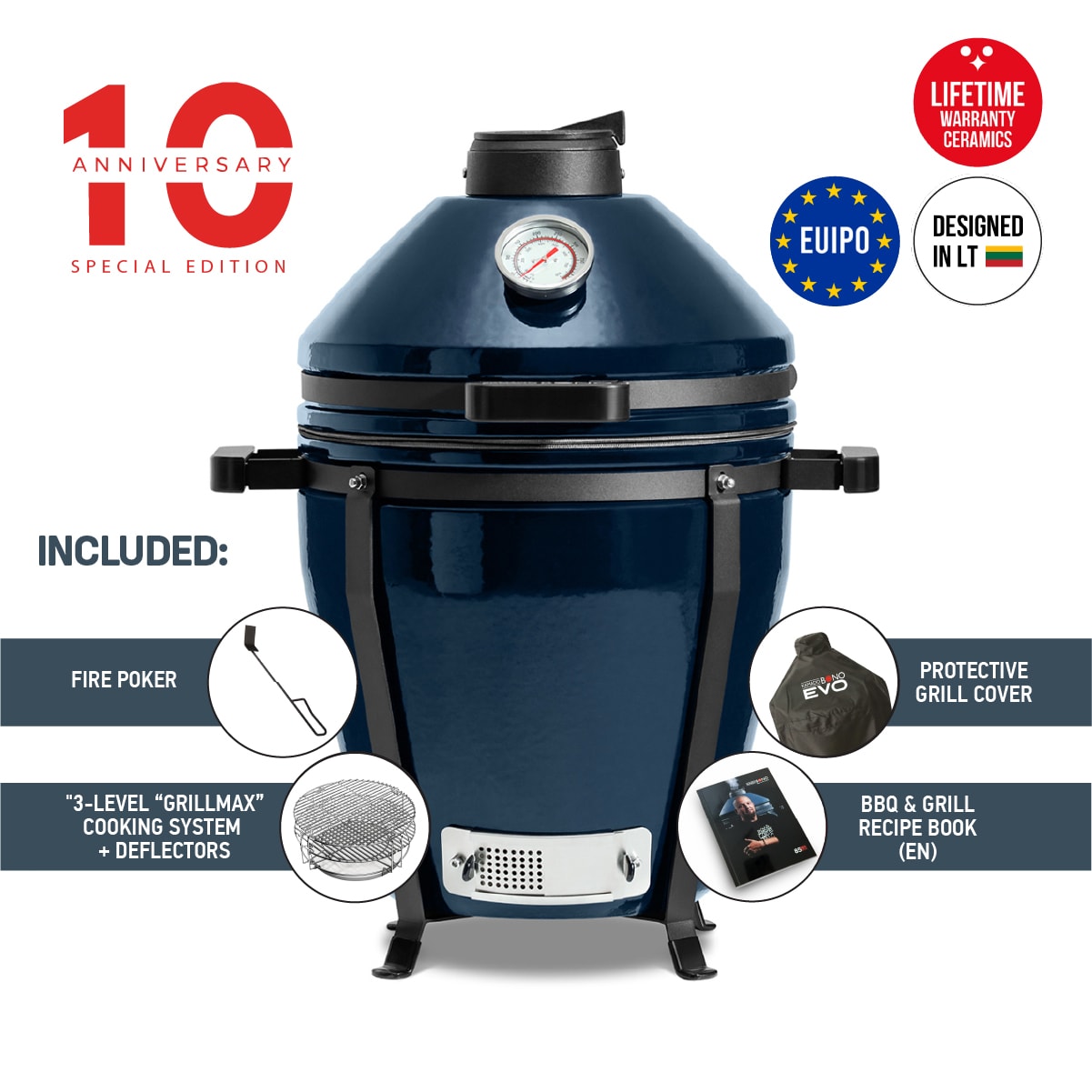
The difference is the fire. In a kamado the charcoal is below the stone, so you must put a heat deflector between the coals and the stone. Without it the base burns before the top has cooked. Every Kamado Bono comes with a deflector or the two-zone system that does the same job, so nothing extra is needed beyond the stone.
Charcoal also adds something no gas oven has. Pizza baked over lumpwood, especially with a small chunk of oak or fruit wood on the coals, picks up a faint smokiness that suits a margherita or a pizza bianca beautifully.

The set-up that works: stone, height, temperature
- Choose the right stone for your grill. 30 cm for Minimo, Media and Grande; 36 cm for Media, Grande and Limited; 42 cm for the Limited. A stone that fills the grate edge to edge blocks airflow, so leave a gap around it.
- Deflector in, stone on top, as high as possible. On the two-zone system or the EVO GrillMax system, put the stone on the upper level so it sits in the dome where the heat reflects down. The further the stone is from the coals, the more evenly the base and top cook.
- Heat with the stone in place. Light the grill, fit the deflector and stone straight away and bring the dome up to 300–350°C. Give the stone 30–45 minutes to soak up heat. A cold stone on a hot grill is the number one cause of pale bases.
- Check the stone, not the dial. A Forneza infrared thermometer pointed at the stone tells you when it is ready: 300°C or higher on the surface. The dome thermometer can read 350°C while the stone is still at 200°C.
- Bake for 4–6 minutes, turning once. Slide the pizza on with a peel, close the lid, turn it halfway through with a turning peel, and take it out when the crust has dark spots and the cheese is bubbling.
The one number to remember
A kamado bakes best at 300–350°C on the stone. It can go hotter, but above that the gasket takes a beating and the base burns before the top is done. If you want the 450°C, 90-second Neapolitan style, that is what a dedicated pizza oven is for.
Shop this section
Everything you need to bake on a Kamado Bono
A ceramic stone for your grill size and a way to read its surface temperature. The deflector is already in the box.


Kamado vs gas pizza oven, side by side
The Forneza Forno 13 and Forneza Forno 16 are the two gas pizza ovens we stock. Both come as complete bundles with a cover, peel, stone, body thermometer, regulator and hose, so the price you see is the price you pay. Here is how they compare with baking on a Kamado Bono.
| Kamado Bono with stone | Forneza Forno 13 / 16 | |
|---|---|---|
| Time to pizza-ready | 30–45 min | 10–15 min |
| Bake time per pizza | 4–6 min | 60–120 s at full heat |
| Style | Crisp base, light char, faint smoke | Neapolitan: leopard-spotted, soft, very fast |
| Max sensible temperature | 350°C on the stone | 400°C+ |
| Baking area | 30, 36 or 42 cm stone | 32.8 cm (13”) or 40.6 cm (16”) |
| Fuel | Charcoal already in the grill | Propane bottle |
| Also cooks | Everything: smoking, roasting, grilling, bread | Meat, fish and vegetables in a tray or cast iron |
| Weight | Stays in place | 17 kg (13”) / 24 kg (16”), portable |
| Price | Stone from £19.99 if you own a kamado | £349 / £499 complete |
Times are typical from our own cooking. Forneza specifications are from the product pages; Kamado figures assume the stone is preheated on a deflector as described above.
The short version: a kamado makes very good pizza as one of a hundred things it does. A Forneza makes exceptional pizza very quickly and is happier at the extreme temperatures true Neapolitan pizza needs. Neither result is a compromise; they are different pizzas.

Which should you buy?
You are choosing your first outdoor cooker
Buy the kamado. It bakes pizza well and does everything else, and a pizza oven does not smoke ribs or roast a turkey. Use the size guide to pick the model, and add the matching stone. If pizza later becomes the thing you do every Friday, add a Forneza then.
You already own a kamado and want faster, hotter pizza
If you make pizza once a month, buy the stone and be happy. If you make it every week, host pizza nights, or want the true 90-second Neapolitan style, the Forneza Forno 13 pays for itself in convenience: fifteen minutes from cold, and the kamado stays free for the rest of the meal.
You already own a gas BBQ and want pizza
A gas BBQ cannot bake pizza properly because it heats from below only. Rather than a stone for the BBQ, buy a Forneza; it costs about the same as a stone and peel set and gives a real pizza oven. Or, if you want charcoal cooking too, read our kamado vs gas comparison before spending anything.
You have a small space
The EVO Minimo 16” with a 30 cm stone is the smallest set-up that bakes a full-size pizza and also grills and smokes. The Forneza 13 is lighter and can be stored indoors between uses.
Shop this section
Pizza-ready cookers we recommend
Forneza bundles include every accessory. Kamado Bono grills include the deflector; add a stone for your size.


Peels, cutters and the tools that matter
Pizza tools are cheap, and the right two or three make the process calm rather than frantic.
- A launching peel. The wooden peel is the easiest for launching because dough sticks to it less; the perforated peel shakes off excess flour so it does not burn on the stone.
- A turning peel. The small round turning peel lets you rotate the pizza without lifting the lid for long or dragging the whole pizza off the stone.
- An infrared thermometer. The Forneza infrared thermometer is the difference between guessing and knowing the stone is ready.
- A cutter. The Forneza cutter-knife or the Texas Club wheel cutter.
- Dough containers. Proofing containers for cold-fermenting dough balls for 24–72 hours, which improves the crust more than any equipment change.
- A brush. The brush with scraper clears flour and char from the stone between pizzas.
Shop this section
Pizza tools
A wooden launching peel, a turning peel and an infrared thermometer are the three we would not do without.


Five mistakes that ruin kamado pizza
- No deflector. The base chars black in a minute while the top is raw. Always bake indirect.
- Cold stone. Put the stone in at the start, not when the grill is hot. Give it 30–45 minutes.
- Too much flour or semolina on the peel. It burns on the stone and tastes bitter. Use just enough for the dough to slide.
- Wet toppings. Fresh mozzarella and tinned tomato both release water. Drain the cheese and use a thin layer of sauce, or the centre stays soggy.
- Opening the lid to look. Every opening drops the dome temperature. Set a timer for three minutes, turn, two more minutes, done.
Get those five right and a Kamado Bono will produce pizza that most people assume came from a purpose-built oven. A little Angus & Oink sweet pizza seasoning on the crust before it goes in does no harm either.
Pizza questions people ask before buying
Can I bake bread and desserts on a kamado?
Yes. At 200–230°C with the deflector in, a kamado behaves like a wood-fired oven. Sourdough loaves, focaccia, fruit crumbles in a cast iron dish and even cakes work well; the stone and a Dutch oven are all you need.
Do I need a special pizza stone or will any stone do?
Use a ceramic stone made for kamado temperatures. Thin baking stones from the supermarket can crack at 350°C. Our stones are sized to leave the airflow gap each Kamado Bono needs.
Can I put the pizza straight on the grate?
Not for a proper base. The stone stores heat and gives the crisp, evenly cooked bottom. Flatbreads and naan work directly on a hot cast iron grate, though.
How many pizzas can I cook in one session?
As many as you like. The stone recovers heat within a minute or two between pizzas on a kamado because the ceramic body keeps feeding it. Give it a quick brush between bakes.
Will pizza-oven heat damage the gasket?
Regular baking at 300–350°C is fine. Repeatedly running far hotter than that shortens the life of the felt or fibreglass gasket, which is one reason we recommend a Forneza for people who want extreme heat every week. Gaskets are inexpensive to replace.
Is the Forneza 13 or 16 the better buy?
The 13 bakes a 32 cm pizza, weighs 17 kg and suits most families. The 16 gives a 40 cm floor, so you can bake two small pizzas or use a large cast iron pan, and it is the one for regular pizza parties.
Pizza night, sorted
Tell us which grill you own, or which you are considering, and how often you want pizza. We will tell you whether a stone or a Forneza is the right next purchase.

