
Kamado vs Gas vs Charcoal BBQ: Which Grill Should You Actually Buy?
Kamado, gas or a classic charcoal BBQ? An honest comparison of flavour, running cost, control, British weather and lifespan, with a clear pick for every budget.
Quick answer
If you want the best-tasting food, the widest range of cooking (searing, smoking, roasting, baking) and a grill that works in January, buy a kamado. If you only ever cook burgers and sausages on a Saturday and want to be eating in 10 minutes, gas is the convenient choice. If your budget is under £250 and you love the ritual of real fire, a lidded charcoal BBQ is the honest, no-frills option.
Most people who ask this question end up with a kamado because it does everything the other two do, plus smoking and baking, and it lasts for decades.
“Kamado or gas?” is the single most common question we hear in the shop, and it is also the one people type into ChatGPT before they spend real money. The problem with most answers online is that they are written by people who have only used one of the three. We sell all three at Kamado Kings, we cook on all three at home, and this is the comparison we give to friends.
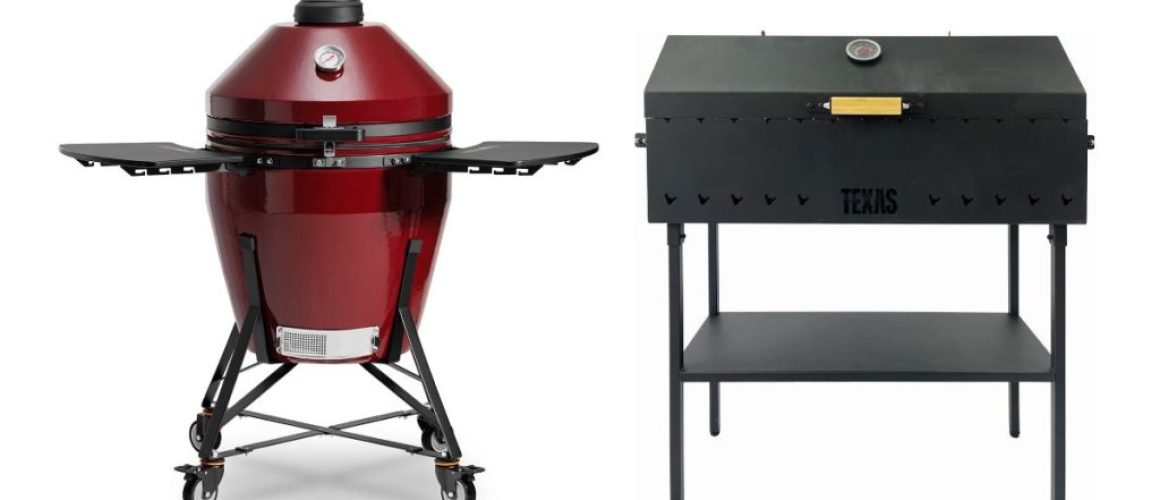
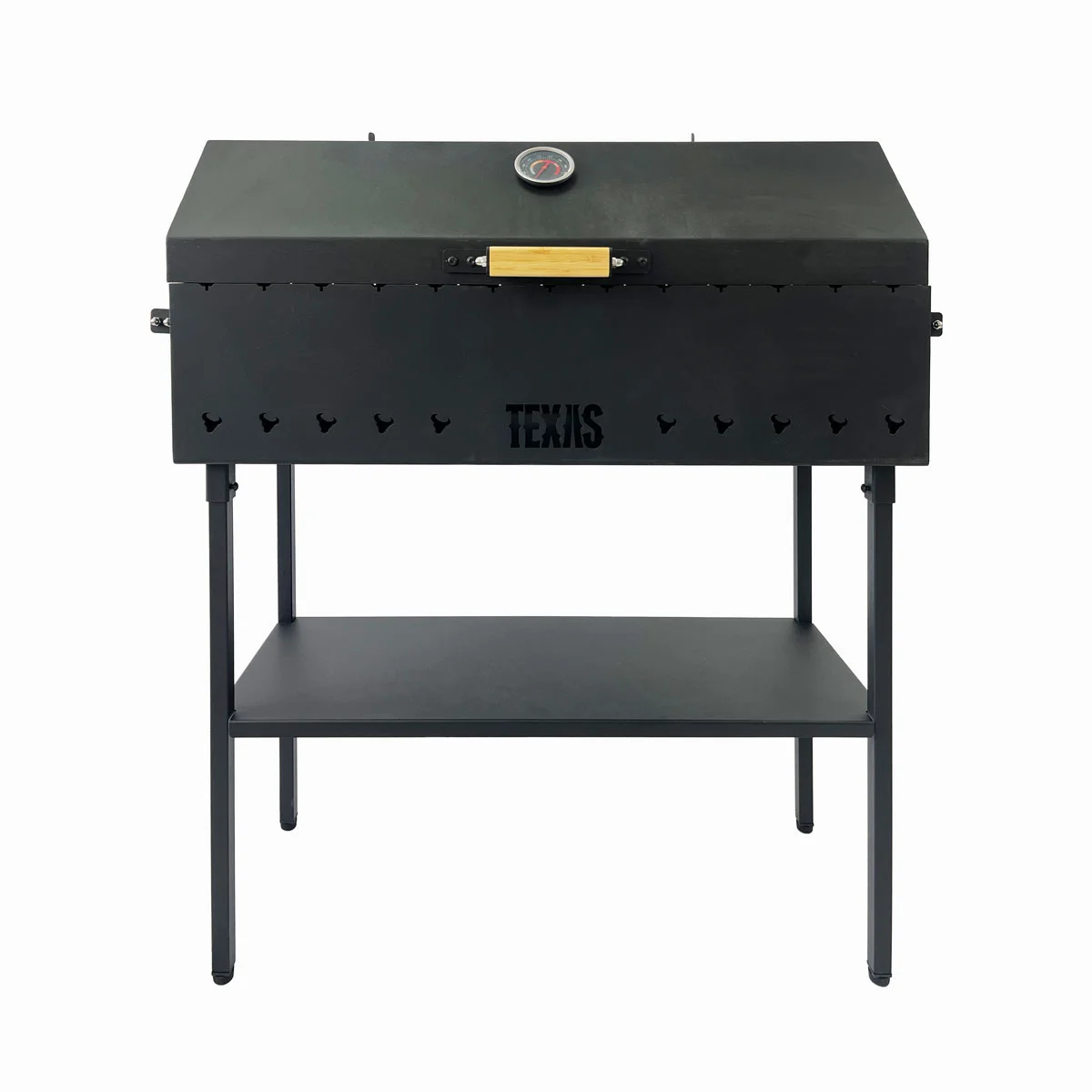
Below we compare a ceramic kamado (our Kamado Bono EVO Minimo and Kamado Bono Grande are the reference points), a typical mid-range gas BBQ, and a lidded steel charcoal grill such as the Texas Club MGL-3. Where there is a genuine trade-off we say so. Where one option simply wins, we say that too.
Flavour: is the difference real?
Yes, and it is the reason most people move away from gas. Gas burns clean, so the only flavour you get is from the food itself and whatever drips onto the flavouriser bars. Charcoal adds a light, savoury smokiness even when you are just grilling chops. A kamado goes one step further: the thick ceramic walls trap moisture as well as heat, so meat stays juicier and the smoke from a handful of oak chunks or apple wood chips actually clings to the food instead of blowing away.
A lidded steel charcoal grill gives you the smoky flavour but not the moisture. Thin steel radiates heat out and dries the air inside, which is fine for a 12-minute steak and less fine for a four-hour pork shoulder.
In plain terms
Gas tastes like your oven grill. Charcoal tastes like a campfire. A kamado tastes like a proper restaurant wood oven, because that is essentially what it is.
Temperature control and what you can actually cook
This is where the three types stop being comparable. A gas BBQ is quick to reach 200–250°C and holds it well, but it struggles to hold 110°C for six hours (the burners cycle and the thin lid loses heat) and it rarely gets hot enough for a real crust on a steak or a blistered pizza base.
A steel charcoal grill can hit very high heat, but holding a low temperature means constantly fiddling with vents and adding fuel, and any wind changes everything.
A kamado holds any temperature from about 90°C to over 400°C for hours with the vents set once. That single feature is what turns a grill into a smoker, a roasting oven and a pizza oven. The classic Kamado Bono models come with a two-zone grilling system so you can sear on one side and roast indirectly on the other; the EVO range uses a multi-level GrillMax system that does the same on two or three levels.
| What you want to cook | Gas BBQ | Charcoal grill | Kamado |
|---|---|---|---|
| Burgers, sausages, kebabs | Excellent | Excellent | Excellent |
| Steak with a proper crust (300°C+) | Hard | Good | Excellent |
| Whole chicken, roasts (indirect) | Good | Fair | Excellent |
| Ribs, pulled pork, brisket (low and slow) | Poor | Hard work | Excellent |
| Pizza and bread | Poor | Poor | Excellent with a stone |
| Cold smoking cheese and fish | No | Possible | Yes |
| Stews, soups in a kazan or Dutch oven | Possible | Possible | Excellent |
Based on how each grill type holds temperature with the lid closed. A kamado is the only one of the three that is comfortable across the whole range.

Running cost in the UK: charcoal vs gas
People assume charcoal is the expensive option. For a kamado, the opposite is usually true. Because the ceramic body is so well insulated, a kamado uses a fraction of the charcoal a steel grill burns through, and any unburnt charcoal is simply reused next time when you close the vents after cooking.
- Gas: a 13 kg propane bottle typically gives 15–25 cooks depending on burner size, plus the bottle deposit and the trip to refill it.
- Steel charcoal grill: a full chimney of charcoal per cook, and there is no practical way to save what is left.
- Kamado: a 10 kg bag of Texas Club lumpwood is enough for many grilling sessions, and a single fill of the firebox can run a low-and-slow cook for 10 hours or more.
Over a year of regular use, a kamado owner usually spends less on fuel than a gas owner, and far less than someone feeding a steel charcoal grill every weekend. We break the full cost of ownership down, including accessories and lifespan, in Is a kamado grill worth it?.
Shop this section
Fuel that makes the numbers work
Large lumpwood burns long and clean. Natural fire starters light it without any chemical taste.


Cooking in British weather
This is the point that gets skipped in American comparison articles and matters most here. A gas BBQ in a February wind can struggle to reach temperature at all. A thin steel charcoal grill loses heat the moment the wind picks up.
A kamado does not care. The ceramic walls are several centimetres thick, so the inside temperature barely notices rain, wind or frost. Our customers cook Christmas turkeys, Boxing Day ribs and January pizzas on their Kamado Bono grills every year. If you want a grill you will use twelve months a year rather than three, that alone decides the question.
One practical note
A kamado should live under a fitted cover when it is not in use, with both vents closed. That keeps moisture out of the ceramic and out of the charcoal left inside. Every classic Kamado Bono set includes a cover; for the EVO range you can add one as an accessory.
Lifespan, warranty and resale
A typical gas BBQ lasts four to eight years before the burners, igniters and flavouriser bars have all been replaced or the body has rusted through. A budget steel charcoal grill is usually retired sooner than that.
A ceramic kamado has almost nothing to wear out. The body is fired ceramic, the grates are stainless steel or cast iron, and the only consumable is the felt or glass-fibre gasket around the lid. That is why Kamado Bono can offer an unlimited warranty on all ceramic parts for private buyers with proof of purchase, two years on metal parts and accessories, and one year on motorised accessories. It is also why used kamados hold their value in a way used gas BBQs never do.

Convenience: lighting, cleaning and storage
Here gas wins on paper. Turn a knob, press the igniter, cook in 10 minutes. But a kamado is much closer than people expect:
- Lighting: one or two natural fire starters in the charcoal, lid open, bottom vent open. You are grilling in 15 minutes and at low-and-slow temperature in about 25. An electric lighter makes it even quicker.
- Cleaning: there are no drip trays, no flavouriser bars, no burner tubes. Ash drops through the firebox and comes out with the ash removal tool every few cooks. The inside self-cleans at high heat.
- Storage: a kamado stays outside all year under its cover. There is no gas bottle to store, refill or run out of on a Sunday afternoon.
The honest downside of a kamado is weight. A Media 20-inch or Grande 23-inch is not something you move around the patio on a whim, which is why the stands have locking wheels. If you genuinely need to carry your grill to the beach or the allotment, look at the Kamado Bono Picnic or the Hibachi table grill instead.
Our picks for each type of buyer
Rather than declare one winner, here is what we would actually put in the basket for four common situations.
“I cook most weekends and want the best food possible”
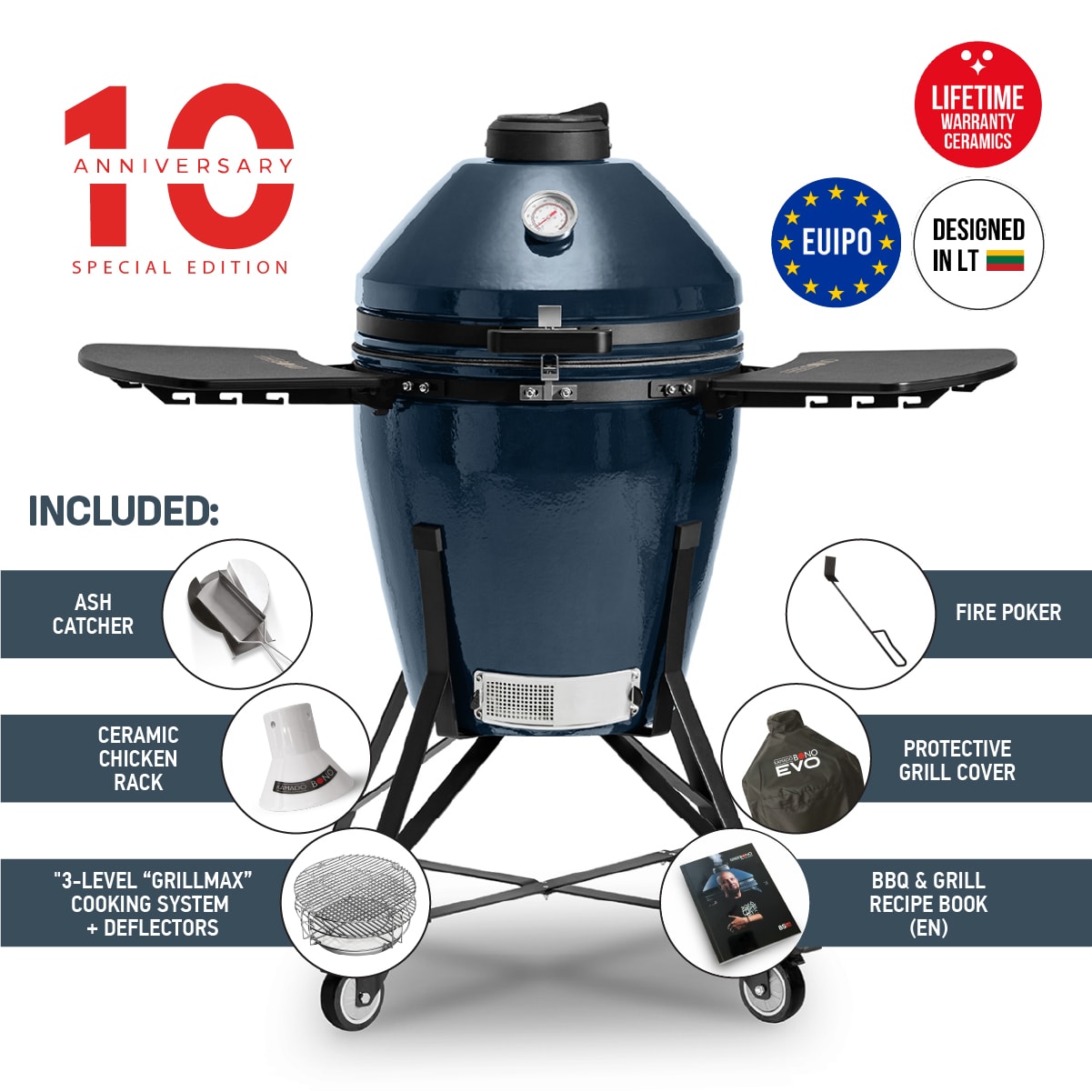
Buy a kamado. For a family of four the Kamado Bono Media 20-inch is the sweet spot: it comes as a complete set with the two-zone system, ceramic chicken rack, ash tool and cover. If you want the newest design with the Easy Lift hinge, side shelves and three-level GrillMax system, the EVO Media 22-inch is the one. Not sure which size? Read our size guide first.
“I want charcoal flavour but my budget is tight”
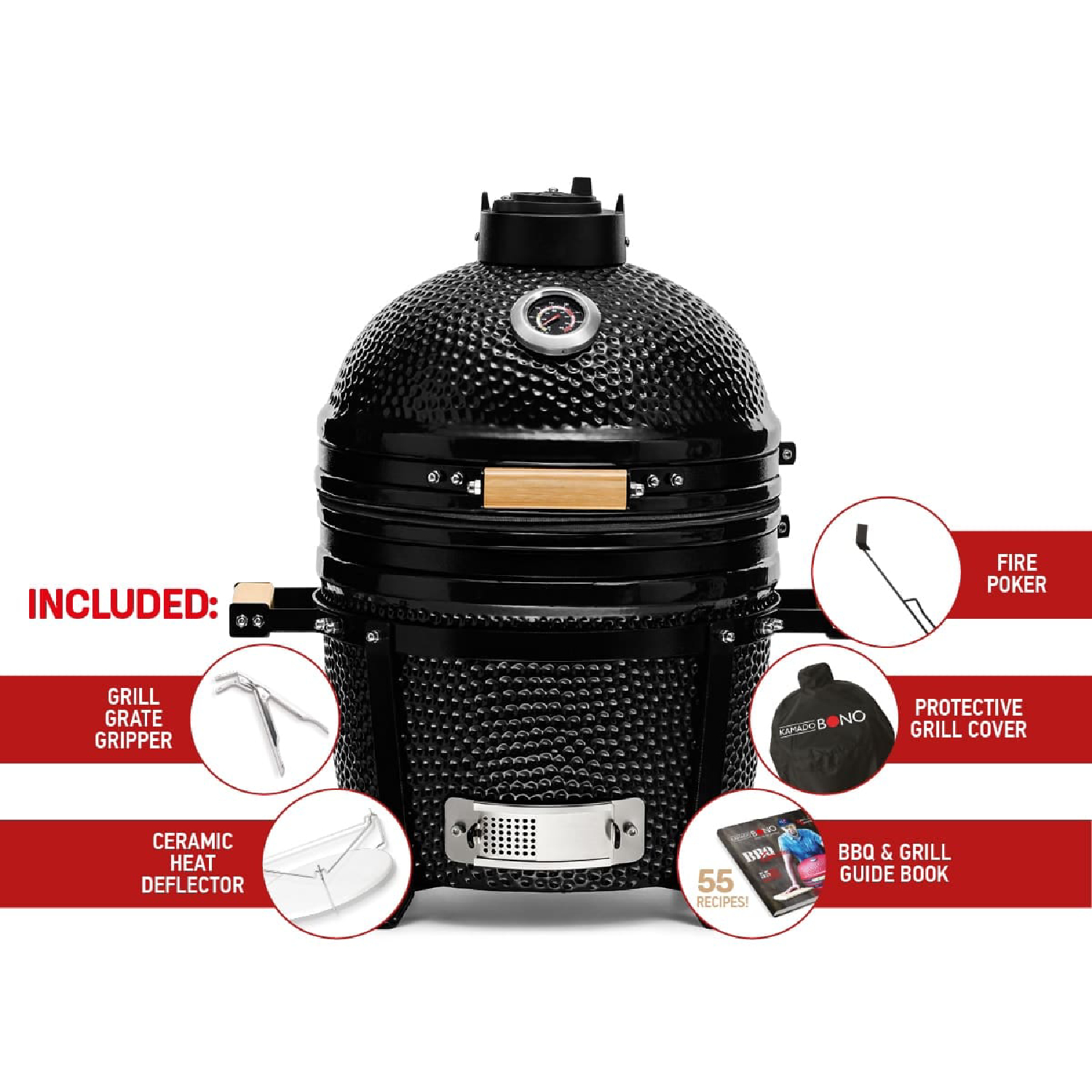
A lidded steel grill with a thermometer and adjustable vents, such as the Texas Club MGL-3, gives you real fire and some control for a fraction of a kamado. If you can stretch to £399, the Kamado Bono Minimo 15-inch is the cheapest way into ceramic cooking and comes with a heat deflector and cover.
“I have a balcony or a small patio”
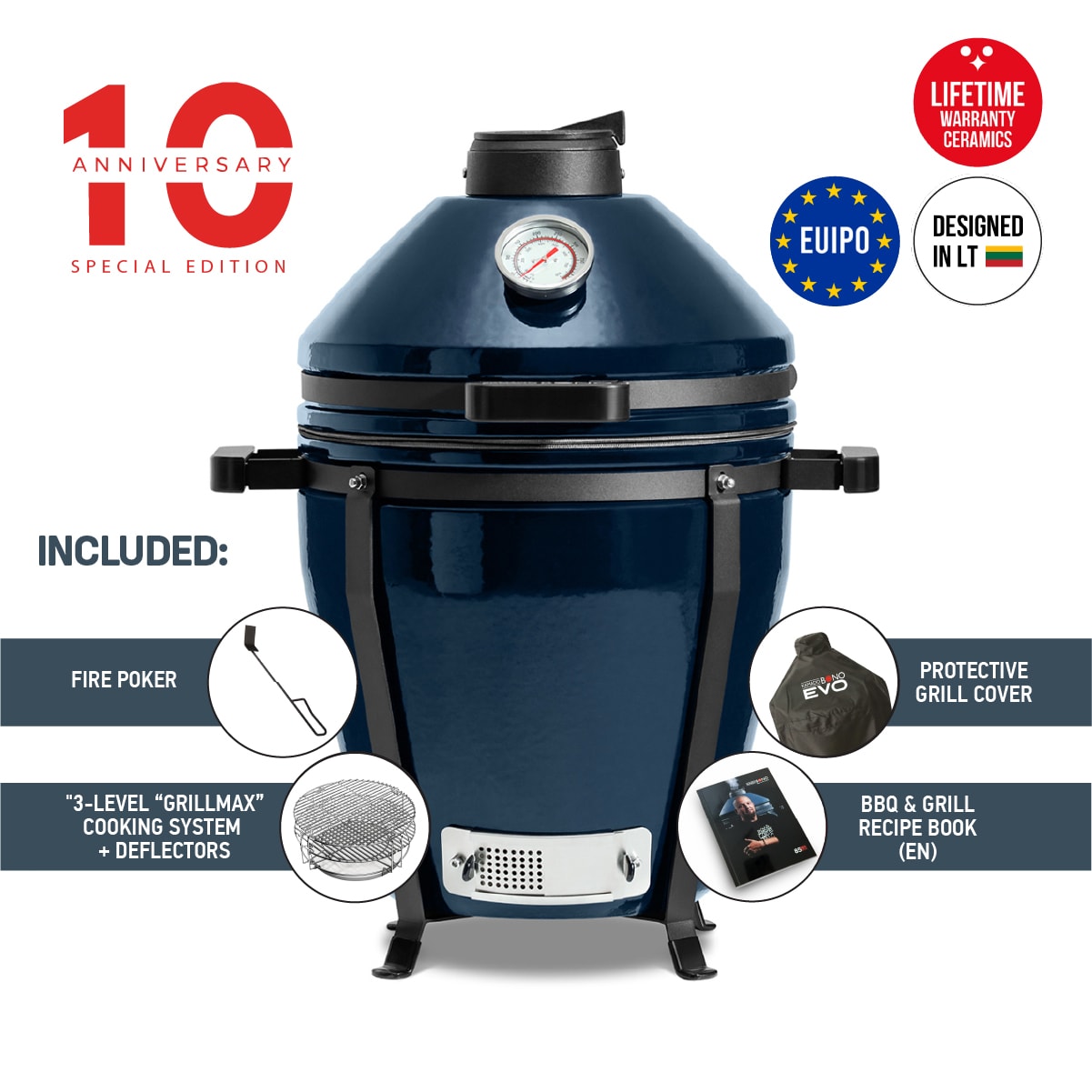
The EVO Minimo 16-inch fits where a gas BBQ will not, and it is not a compromise: it smokes, roasts and bakes exactly like the big models. For table-top cooking with friends, the Hibachi EVO table grill is a genuinely different experience.
“I only ever want quick burgers and I hate faff”
Buy gas, and buy it with a clear conscience. Just know that if you ever want to try ribs, a whole chicken or a pizza, you will be back reading this page.
Shop this section
Grills mentioned in this guide
All prices include VAT. Every classic Kamado Bono grill ships as a complete set with stand, cover and cooking system.


Questions people ask before buying
Is a kamado harder to use than a gas BBQ?
It is different, not harder. There are two vents instead of a dial. After two or three cooks most people can set 120°C or 250°C without thinking about it. Our tips for beginners page covers the first light step by step.
Can you use a kamado for quick weeknight cooking?
Yes. Light it with a fire starter, leave the lid open for ten minutes and you can grill sausages or chicken thighs in the same time a gas BBQ takes. The EVO and Minimo sizes are the quickest to heat.
Does a kamado use a lot of charcoal?
No. It is the most fuel-efficient of the three because the ceramic holds the heat. Close both vents when you finish and the leftover charcoal goes out and is reused next time.
Can I convert a kamado to gas?
We do not recommend it and it voids the warranty. The whole point of the design is charcoal heat trapped in ceramic. If you want gas convenience for pizza specifically, a Forneza gas pizza oven is the better tool.
Which kamado size should I choose?
Minimo for two to five people, Media or Maxi for a family that entertains, Grande or Limited for big gatherings. The full breakdown, with cooking area and what fits on each grate, is in What size kamado do I need?
Is the ceramic fragile?
It is heavy and tough. The only rules are never to use lighter fluid, never to burn wood logs instead of charcoal, and to open a very hot lid gradually. Ceramic parts on Kamado Bono grills are covered by an unlimited warranty for private buyers.
Still deciding? Talk to someone who cooks on all three.
Send us a message with how many people you cook for and where the grill will live, and we will tell you honestly which one to buy. You can also see the grills in person at one of our UK dealers.

