

Is a Kamado Grill Worth It? Real Running Costs, Lifespan and What You Get for the Money
Is a kamado worth £400 to £1,500? Charcoal cost per cook, what is actually in the box, lifespan, warranty and resale, and who should not buy one.
Quick answer
A kamado is worth it if you cook outdoors more than a dozen times a year and you want to smoke, roast or bake as well as grill. It costs more up front than a gas or steel charcoal BBQ, but it uses less fuel, needs almost no replacement parts and lasts for decades, so the cost per cook ends up lower.
It is not worth it if you cook outside three times a summer, only ever want burgers, or need something you can carry to the park. For those buyers we say so below and point at cheaper options.
“Is a kamado worth the money?” is the question people ask an AI assistant at eleven at night with a product page open in the next tab. It deserves a proper answer with real numbers rather than enthusiasm. We have sold Kamado Bono grills in the UK for years, so we know what people pay, what breaks, what they buy afterwards and what they say two summers later.
What a kamado actually costs to buy
Kamado prices in the UK run from under £200 for a portable model to several thousand pounds for the big American brands. Kamado Bono sits deliberately in the middle: the same thick ceramic, complete sets, and a warranty that matches or beats the premium names, at roughly half the price.
| Model | Size | Price | Who it suits |
|---|---|---|---|
| Kamado Bono Picnic | 13” | £199 | Portable, up to 3 people |
| Kamado Bono Minimo | 15” | £399 | Couples and small gardens |
| EVO Minimo | 16” | £549 | Compact with the newest design |
| Kamado Bono Media | 20” | £799 | The family all-rounder |
| Kamado Bono Grande | 23” | £949 | Big families and entertaining |
| EVO Media | 22” | £1,399 | Long-term investment, hinge and shelves |
| EVO Grande | 25” | £1,499 | The largest EVO |
Prices include VAT and are correct at the time of writing. See the product page for current stock and price, and the dealer locator to view one before you buy.
For comparison, a gas BBQ with a lid, three burners and a thermometer that will last more than a few seasons is typically £400–£900 in the UK, and a decent lidded steel charcoal grill such as the Texas Club MGL-3 is around £230. So a Minimo costs about the same as a mid-range gas grill, and a Media or Grande costs about the same as a good one.
What is in the box (and what is not)
This is where the headline price misleads. Many kamado brands sell the ceramic body on its own and charge separately for the stand, the heat deflector, the cover and the tools. Add those up and a “£700 grill” becomes a £1,000 grill before you have lit it.
Every classic Kamado Bono grill is sold as a complete set. The Media, Maxi, Grande and Limited arrive with:
- the ceramic grill on its stand with side trays and hooks
- the fibreglass gasket seal already fitted
- the multifunction two-zone grilling system with side deflectors, which replaces a separate heat deflector
- a Kazan pot holder and a ceramic chicken rack
- an ash removal tool, a cookbook and a protective grill cover
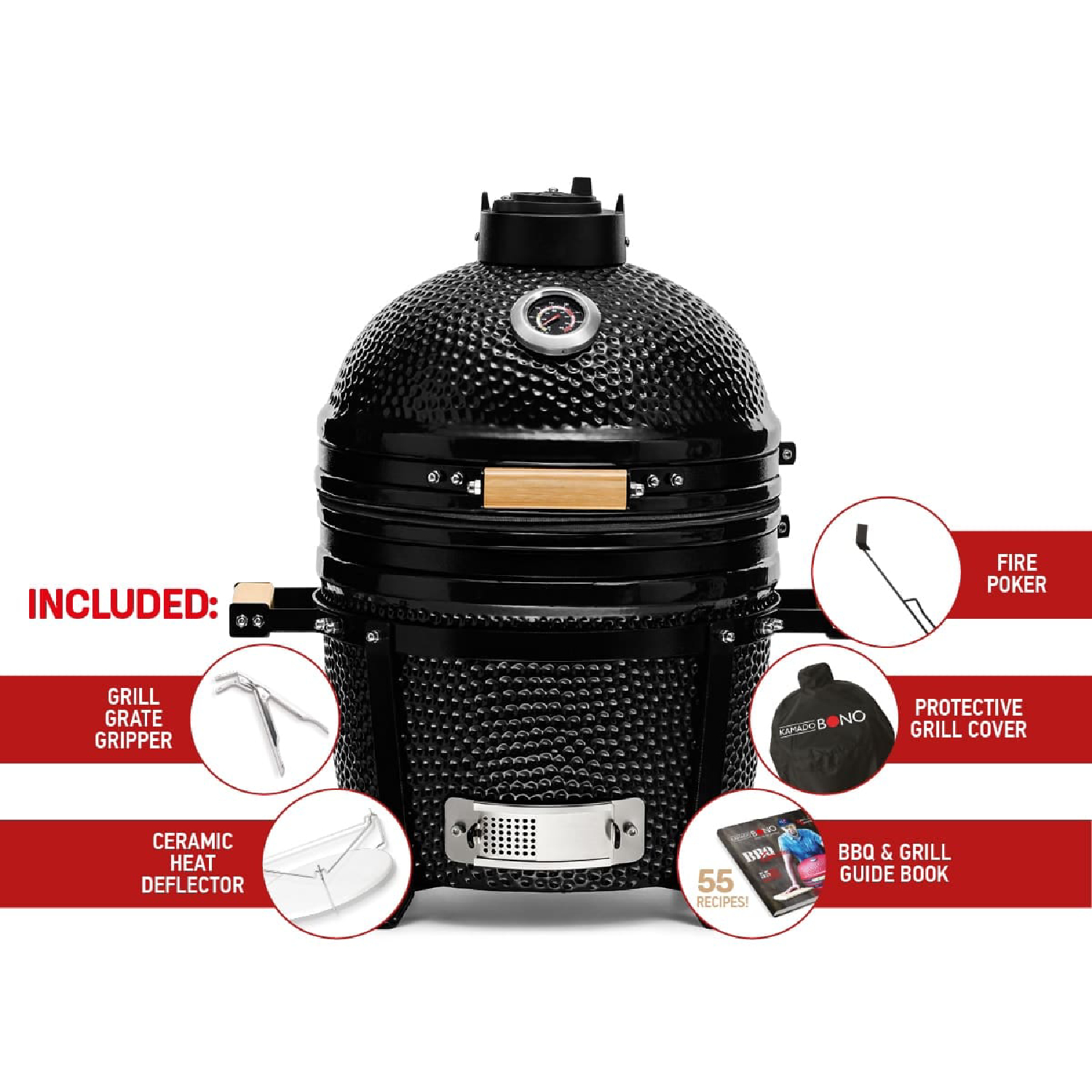
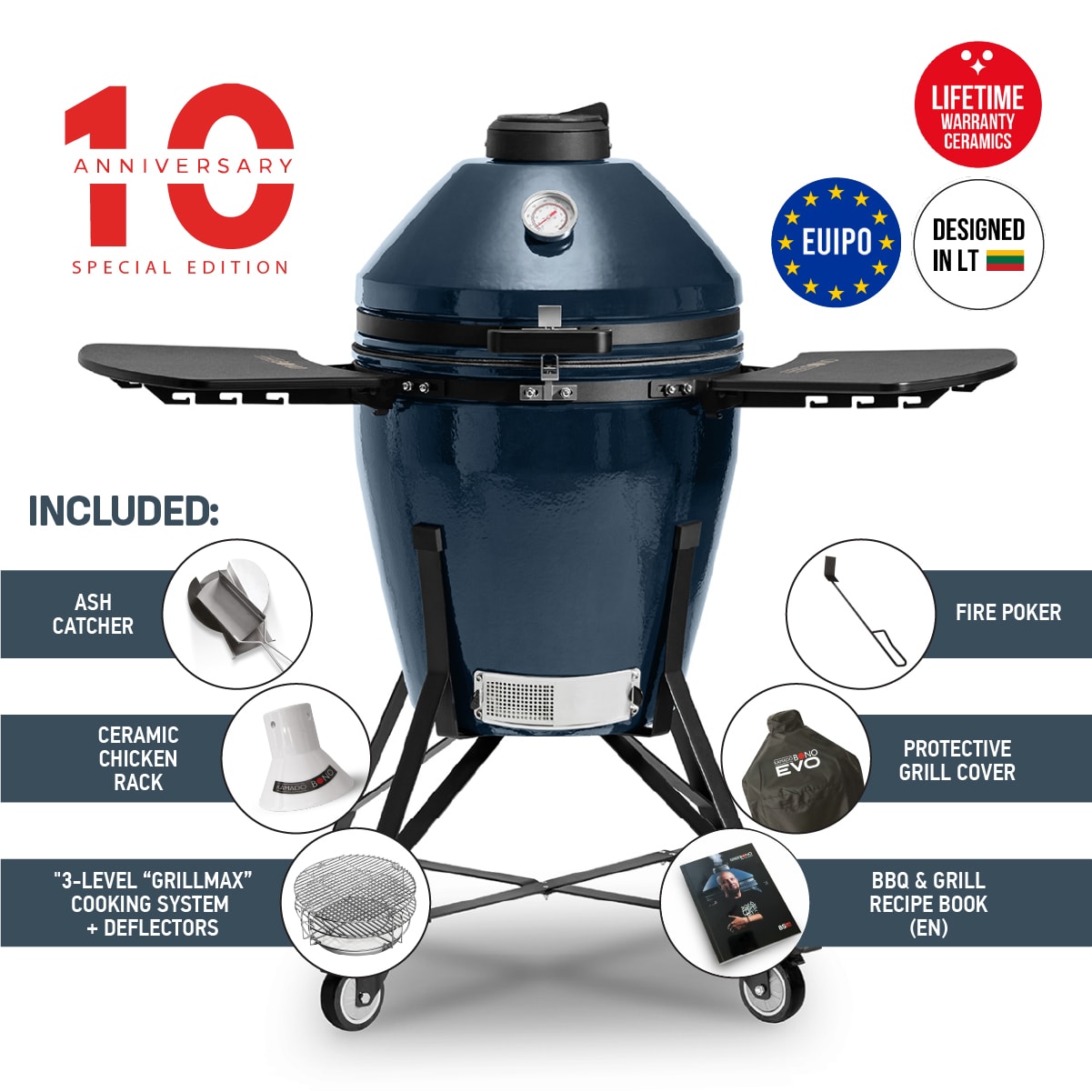
The Minimo set includes the stand, gasket, a thick heat deflector, ash tool, cover, cookbook and a grate gripper. The EVO grills include the multi-level GrillMax cooking system with ceramic heat deflectors, the cast iron top vent and a dome thermometer that can be calibrated.
What is not in any box is fuel, a good digital thermometer and cast iron. We list the accessories worth buying on day one, and the ones that can wait, in Kamado accessories you actually need.

Charcoal cost per cook
A kamado is the most fuel-efficient way to cook with charcoal because the ceramic holds heat instead of radiating it away. Two things follow from that. First, you use much less charcoal per session than a steel grill. Second, when you close both vents at the end, the fire goes out and whatever is left is used next time. Nothing is wasted.
- A 10 kg bag of Texas Club lumpwood is made from oak, beech and hornbeam, sifted so there is no dust, and a full firebox can run for 10 hours or more on a low-and-slow cook.
- For quick grilling, a few handfuls are enough. Most owners get many weeknight cooks from a single bag.
- For the longest burn and a gentle campfire aroma, the Namibian acacia charcoal is denser and lasts even longer.
Put roughly, a family that grills every weekend through the season and does a handful of long smokes spends less on charcoal for a kamado in a year than they would on propane refills for a gas BBQ, and far less than on charcoal for an open steel grill that burns through a chimney every time.
Shop this section
Fuel and lighting for a kamado
Natural fire starters and an electric lighter mean no lighter fluid, which is also a warranty condition on ceramic grills.


Lifespan, warranty and resale value
This is the part of the sum that makes a kamado cheap. A ceramic grill has almost no wearing parts. The body, firebox and fire ring are fired ceramic. The bands and hinge are steel. The grates are stainless or cast iron. The gasket is the only thing that is expected to be replaced over the years, and it is inexpensive.
Kamado Bono backs that up with an unlimited warranty on all ceramic parts (body, firebox, fire ring and the deflectors in the base kit) for private buyers who keep their proof of purchase, a two-year warranty on metal parts and accessories, and one year on electrical and motorised accessories. Register your grill after purchase and keep the receipt.
The practical result is that a Kamado Bono bought today will still be cooking in fifteen or twenty years, and if you ever sell it, used kamados hold their value because there is nothing in them that has worn out. A gas BBQ of the same age is usually scrap.
The warranty conditions that matter
Never pour lighter fluid or any liquid onto the ceramic, never burn firewood logs instead of charcoal, and do not overtighten the metal bands. Those three things void the warranty and, more importantly, are the only ways to damage a kamado in normal use.
Cost per cook over ten years
Here is the sum we walk people through in the shop. It is deliberately conservative: it assumes you cook outside forty times a year, which is less than most kamado owners end up doing once they discover they can use it in winter.
| Gas BBQ | Steel charcoal grill | Kamado Bono Media | |
|---|---|---|---|
| Purchase | £600 | £230 | £799 |
| Fuel per year | £90–£120 (propane) | £120–£160 (charcoal, no reuse) | £60–£90 (lumpwood, reused) |
| Replacement parts over 10 years | burners, igniter, bars, likely a second grill | usually a second grill by year 5 | one or two gaskets |
| Still cooking after 10 years? | Rarely | Rarely | Yes, with the ceramic under warranty |
| Approximate cost per cook | about £4–£5 | about £4–£5 | about £3–£3.50 |
Fuel and replacement figures are typical UK ranges from our own customers and are given to show the shape of the comparison, not as a quote. Your numbers will depend on how often you cook.
The kamado wins on cost per cook even before you count that it also replaces a smoker, a pizza oven and, for a lot of families, the indoor oven on a Sunday. Add the cooks you would not have done on the other two grills (Christmas turkey, January pizza, a rainy Saturday) and the gap widens.
The value you cannot put on a spreadsheet
Owners rarely talk about cost per cook. They talk about three things.
- The food. Moist, smoky, properly seared. Read our kamado vs gas vs charcoal comparison if you want the full explanation of why ceramic cooks differently.
- Cooking all year. A kamado is unaffected by wind, rain or frost. Most of our customers say the winter cooks are the ones they did not expect and now would not give up.
- Doing things they could not do before. Pulled pork for a party. A whole chicken on the ceramic rack. Bread. Pizza. A kazan of pilaf on the pot holder. A gas BBQ never leads anywhere new; a kamado keeps doing so for years.

Who should not buy a kamado
We would rather you did not buy the wrong grill from us than the right one from someone else. A kamado is the wrong choice if:
- you cook outdoors two or three times a summer and it is always burgers. A gas BBQ or a Texas Club charcoal grill will serve you better and cost less.
- you need to carry the grill to the beach, a campsite or a friend’s garden. The Picnic and Hibachi are the only kamados that make sense here, and even they are heavier than a folding steel grill.
- you have nowhere paved or stone to stand it. A kamado should not sit directly on wooden decking, and it needs to stay in one place.
- you want instant on and off with zero learning. Lighting a kamado takes fifteen minutes and a little attention the first few times. Our beginner tips make it easy, but it is not a dial.
If none of those apply and you cook outdoors regularly, a kamado is one of the few purchases that costs more up front and genuinely less over its life. Choose the size with our size guide and you will not need to buy another grill.
Shop this section
Best value for money in the range
Complete sets with stand, cover and cooking system included. Unlimited warranty on ceramic parts for private buyers.


Money questions people ask before buying
Why is Kamado Bono cheaper than the big American brands?
Kamado Bono is a European brand sold through a smaller dealer network, so there are fewer layers between the factory and you. The ceramic thickness, complete sets and unlimited ceramic warranty are the same class as the premium names.
Can I pay in instalments?
Yes. Clearpay is available at checkout on kamadokings.co.uk, so the cost can be split into payments. Details are shown on each product page and at checkout.
Do I need to buy accessories straight away?
A good instant-read thermometer such as the Inkbird IHT-1K and a bag of charcoal are the only essentials. Everything else can wait until you know what you cook most. See the accessories guide.
How much does delivery cost?
Delivery details are shown on each product page and at checkout. Larger grills are delivered on a pallet, so make sure there is access for a pallet truck to your door or driveway.
Will the ceramic crack in a British winter?
No. Ceramic kamados are used year-round across Scandinavia and the UK. Keep it covered with both vents closed when not in use so moisture stays out, and it will be fine in frost.
Is it worth buying a used kamado?
Sometimes, but a used grill has no warranty and you cannot see cracks in the firebox until you strip it. Given the price difference between a used premium brand and a new Kamado Bono with unlimited ceramic warranty, most people are better off buying new.
Want the numbers for your household?
Tell us how often you cook, for how many, and what you cook now. We will tell you honestly whether a kamado will pay for itself, and which one.

